
Neochrom-ALCO chromatograph
Chromatographic system Neochrom-ALCO intended for the study of biological fluids of the body in order to detect the fact of alcohol consumption
The determination of ethanol and other psychoactive substances is carried out by analyzing biological fluids (blood, urine, etc.) or by the express method - by analyzing the air exhaled by a person (applies to alcohol).
Rapid tests, which are more widely used today, allow to detect or refute the fact of a person's use of psychoactive substances or alcohol, but they cannot be used, for example, as evidence in criminal proceedings. This requires confirmatory studies that are more thorough, longer, and require specific equipment.
Gas chromatographs using equilibrium headspace analysis (HS–GC) determine blood alcohol concentration (BAC) in biological fluids. Analytical accuracy matters in a legal context. Analysis speed, sample throughput, reagent toxicity and cost-effectiveness are also important for high-throughput laboratories.
In the laboratories of the Ministry of Health of Ukraine, the alkyl nitrite method has been used for the analysis of alcohol in blood for several decades. It consists first in derivatization, that is, the formation of volatile alcohol derivatives during the reaction with sodium nitrite in an acidic environment (in the presence of trichloroacetic acid) and followed by analysis on a chromatograph with a packed column and a thermal conductivity detector.
The significant disadvantages of the method are its toxicity, the low resolution of the packed column and the low sensitivity of the detector, which necessitates the use of large volumes of the vapor phase sample (1 cm3).
The NeoChrom team offers solutions for analyzing alcohol, aliphatic alcohols and other psychoactive narcotic substances in human biological samples using Ukrainian-made gas chromatography systems NeoCHROM own production.
The proposed method was first presented at a forensic medicine training event held on 25–27 May 2015 at the Kharkiv Medical Academy of Postgraduate Education.
The method was refined using the work of our colleague, Mr. Felix Kahanovskyi, head of the Forensic Toxicology Department at the Main Bureau of Forensic Medical Examination of the Ministry of Health of Ukraine, and his colleagues, as set out in the guidelines “Determination of ethyl alcohol and detection of other aliphatic alcohols C1–C5 in biological samples by equilibrium headspace gas chromatography”, Kyiv, 2014.
Since the use of other measuring tools and devices is allowed, we have made certain improvements and simplifications that are not inferior to the metrological and technical characteristics of the original.
We offer direct equilibrium headspace analysis without derivatization, using an autosampler with a temperature-controlled tray for vials containing biological samples.
The principle of the method consists in the analysis of the equilibrium vapor formed under controlled conditions on a NeoCHROM chromatograph with a flame ionization detector (FID). The sample is taken from a thermostated vial and introduced by an autosampler into the injector of the chromatograph. The entire process - from the selection of a vapor phase sample, obtaining a chromatogram to receiving a report - is automated. Our specialists adjust the data processing program according to the customer's forms.
The analysis process can be presented in the following form (briefly).
- Adding a weighed portion or measured volume of biological material to a vial of 2 cm3
- Adding a solution of the internal standard (n-propanol) to the vial with the biomaterial.
- Installation of vials (up to 100 pieces) in the tray of the autosampler and holding them for a minimum time (usually 5-10 minutes) until the required temperature is reached (usually 30-40 °C).
- Start the program, receive the protocol.
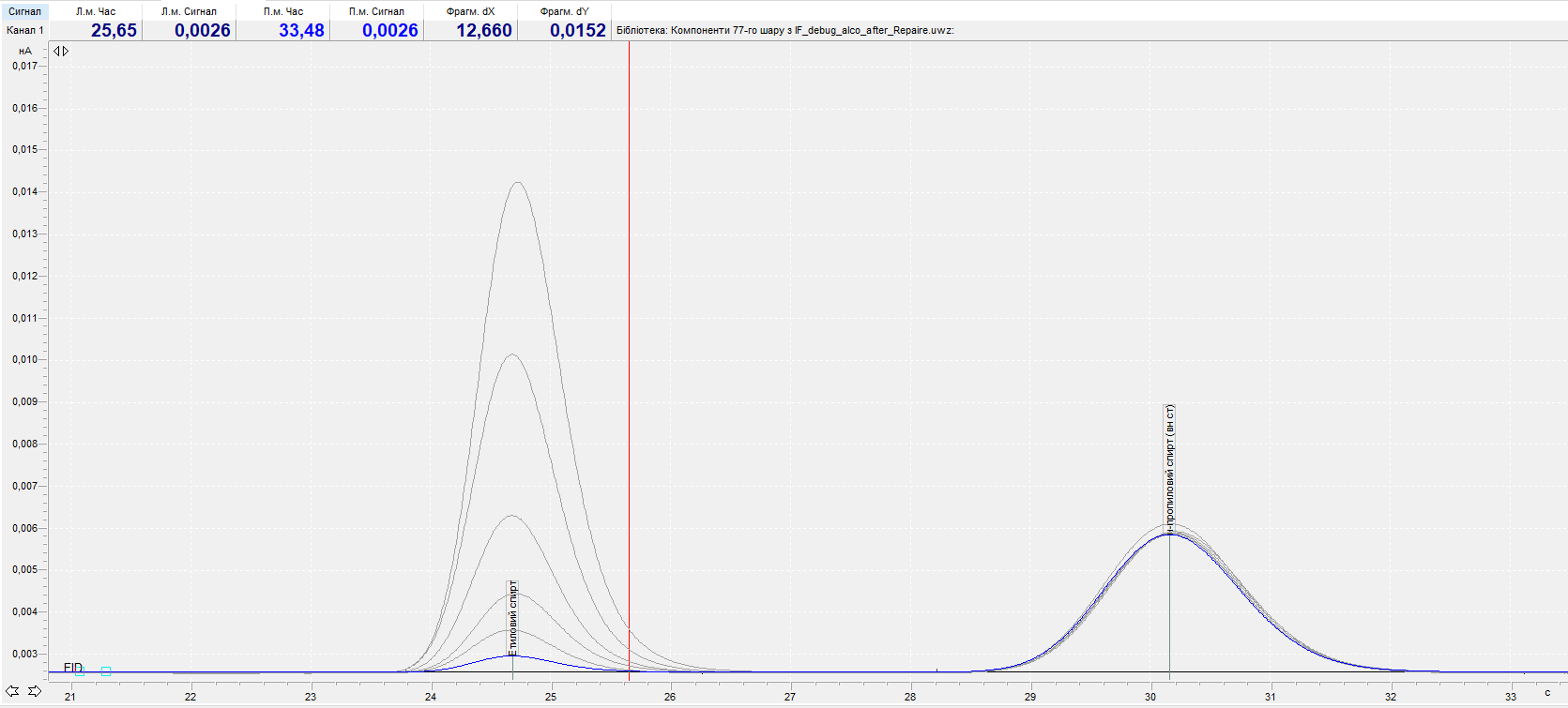
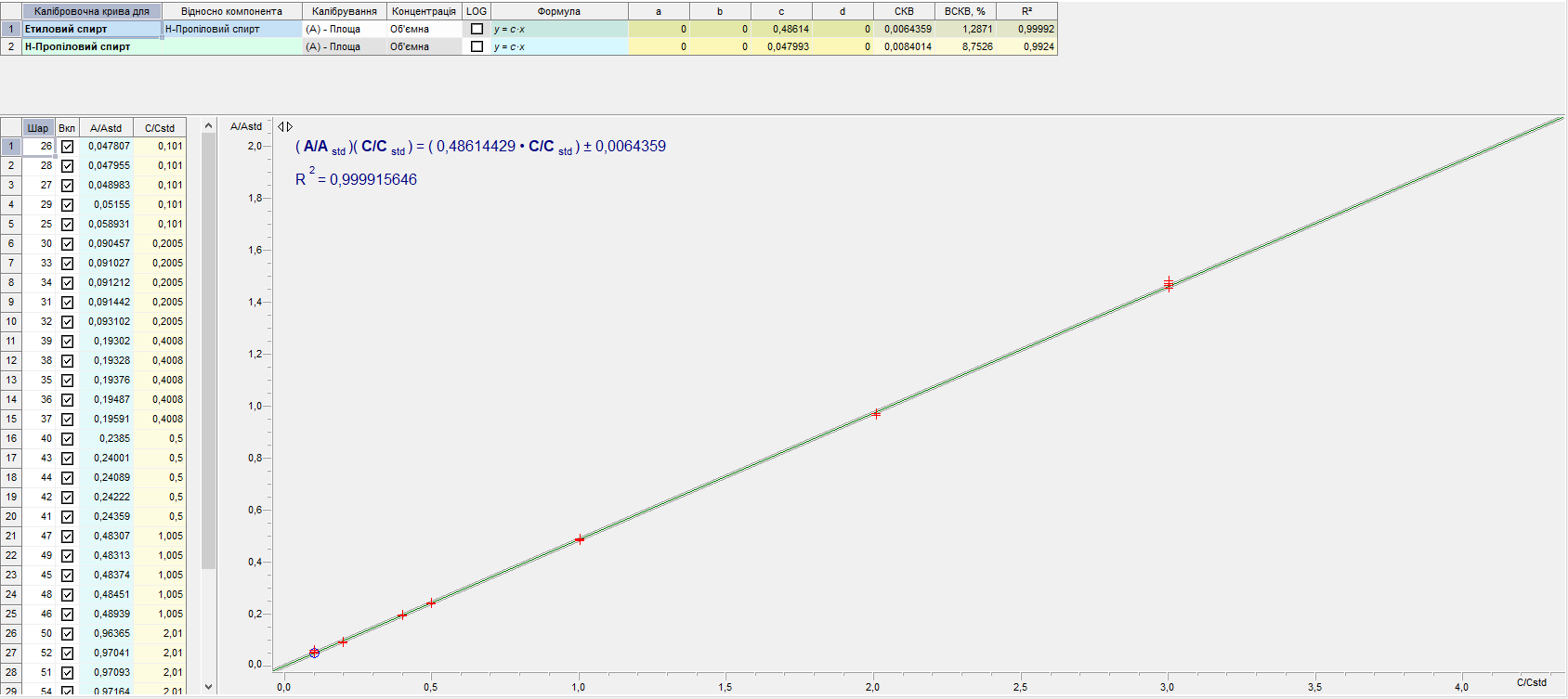
The correlation coefficient of the calibration curve is 0.9999.
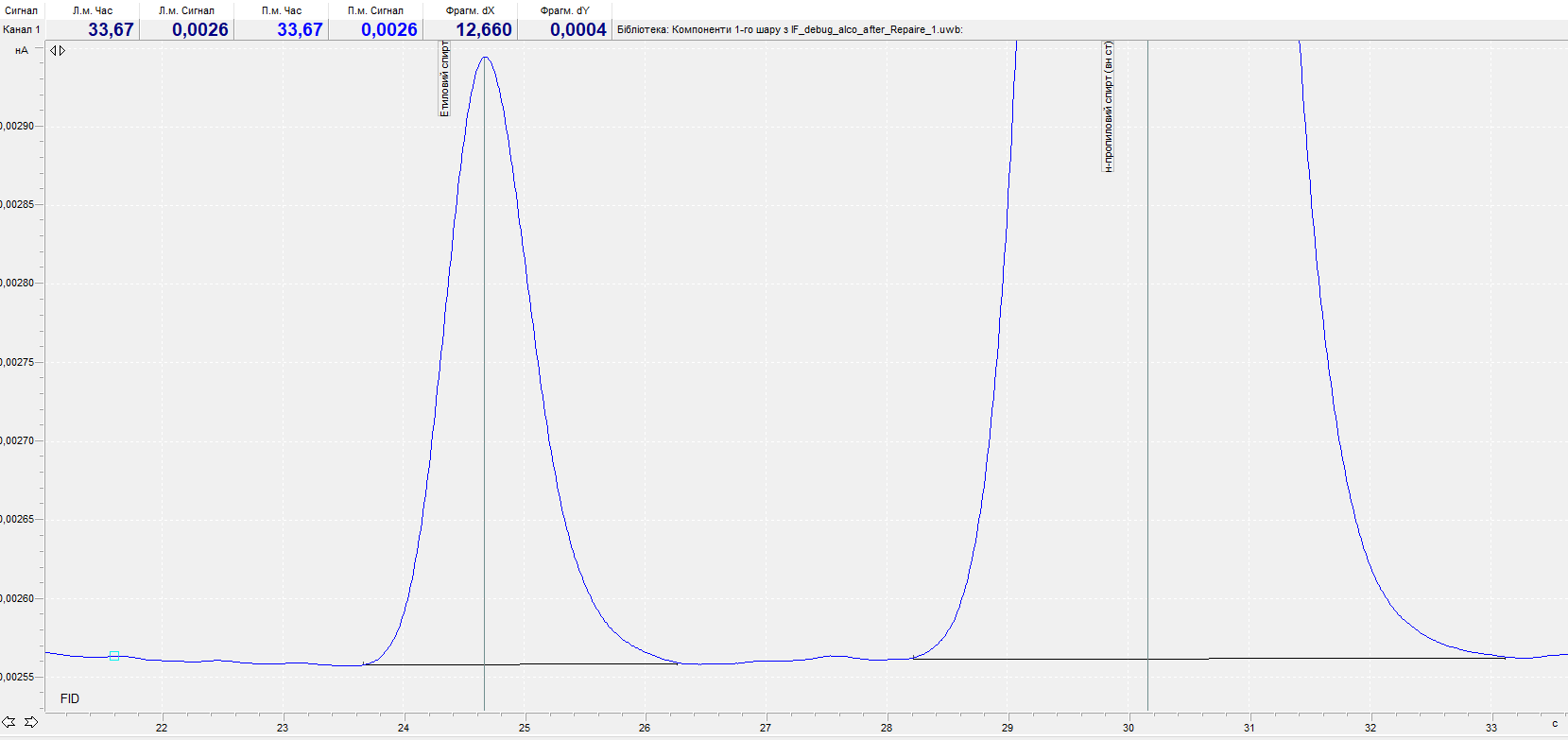
The method has high sensitivity, with a limit of quantification of 0.01 ‰ and high repeatability.
Advantages of our solution based on the NeoCHROM chromatograph.
- High quality. NeoCHROM products carry a 7-year warranty subject to annual maintenance. Our own laboratory certified to ISO/IEC 17025 with devices for use during repair or maintenance.
- Little dependence on the human factor. Automatic introduction of samples.
- Modern approach. Using a capillary column that has a higher resolution compared to a packed column.
- Speed The duration of one analysis is less than 40 seconds
- Convenience Absence of the derivatization stage and simple sample preparation (weighing and preheating the vials for 5 minutes)
- Sensitivity The detection limit is much lower compared to the alkyl nitrite method.
- Economy. Lower total cost of ownership compared to foreign counterparts.
The chromatograph for the determination of alcohol can also be used for the determination of technical volatile organic compounds without any modification or change of the column.
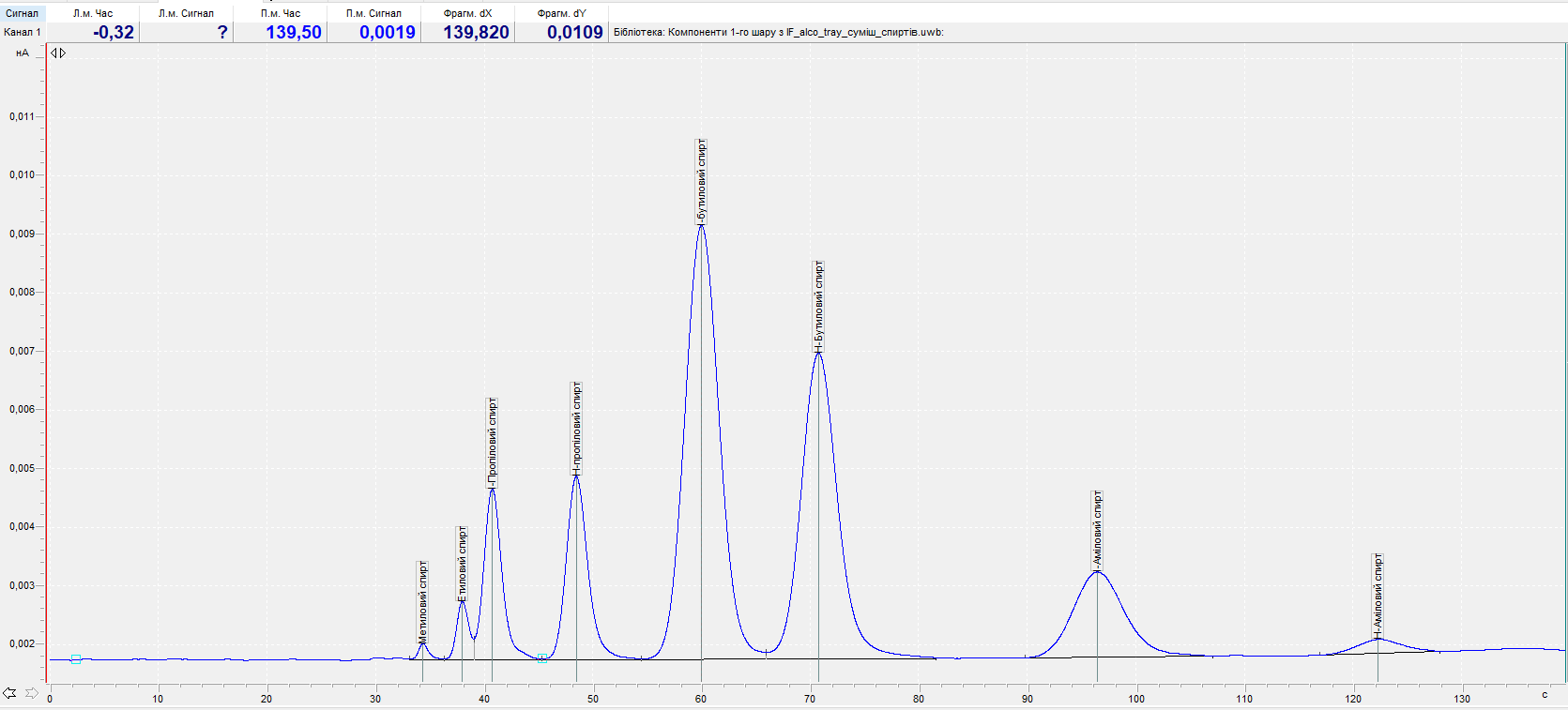
Depending on the load, one or two chromatographs may be needed to solve this analytical problem.
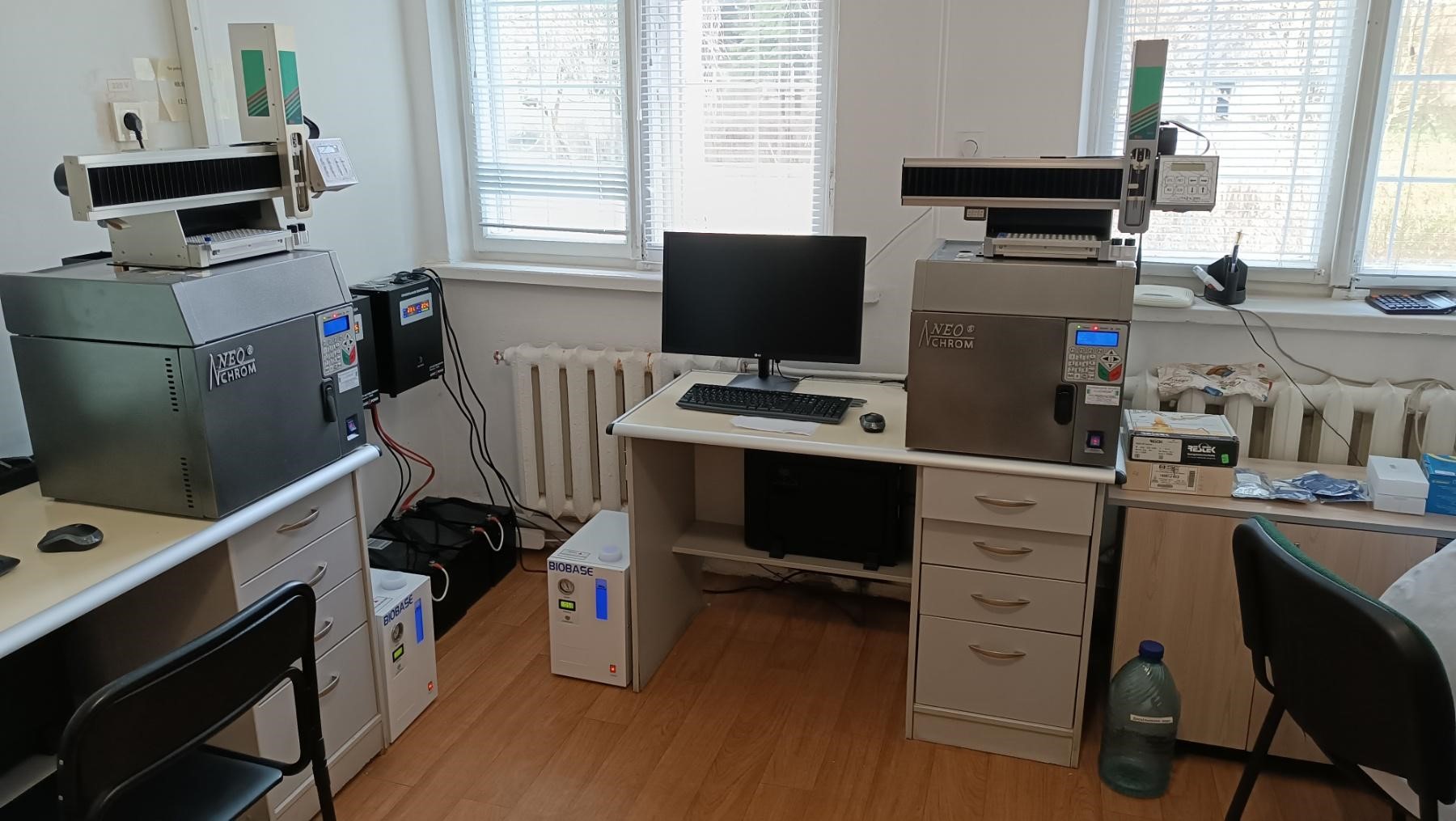
NeoCHROM chromatographs for the determination of alcohol (right) and drugs (left).
The chromatograph for the determination of narcotic drugs and other psychoactive substances is basically the same (Figure 5). It is only necessary to replace the column with a suitable one, and the liquid phase, not the vapor phase, is introduced into the injector.
For narcotic drug analysis, mass spectrometric detection enables identification using mass spectral libraries together with retention indices. Quantitative GC-FID or GC-MS analysis nevertheless requires reference materials with known analyte content.